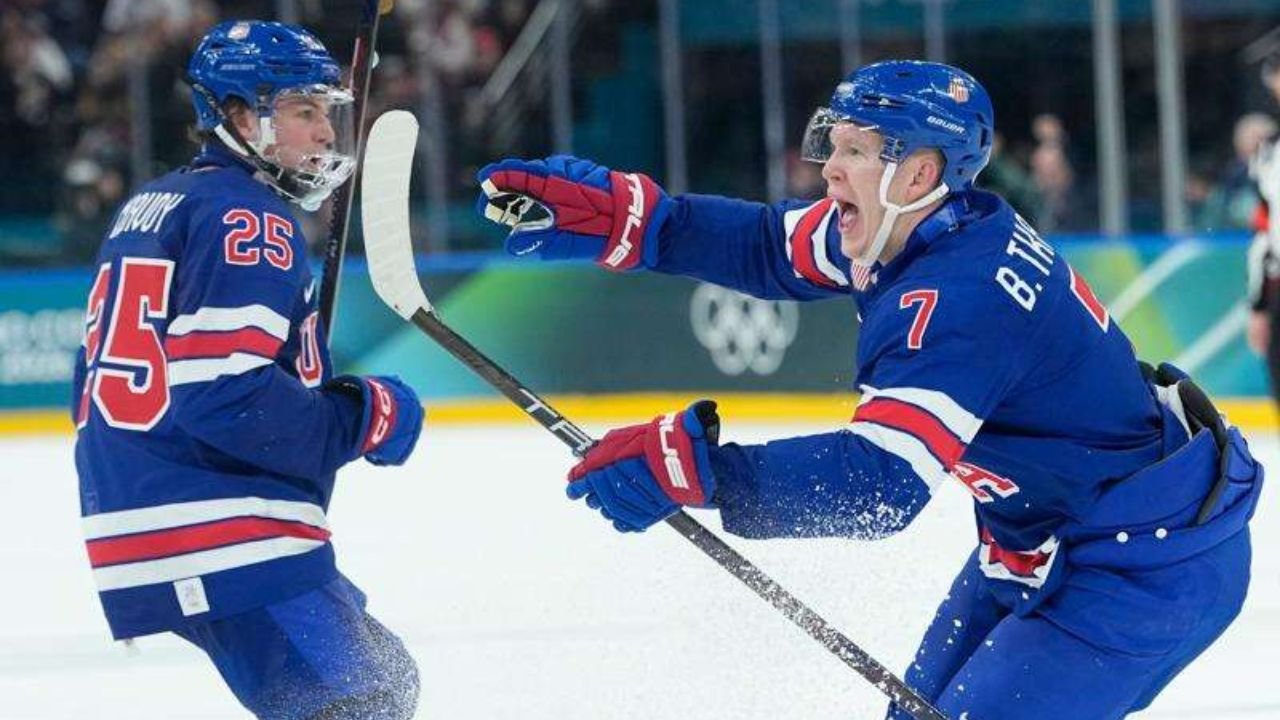
Eichel Sparks: The ice at the Milano Santagiulia Arena became a stage for high-stakes drama on Saturday as Team USA survived a significant scare from a relentless Danish squad. While the 6-3 final score might suggest a comfortable evening, the Americans spent much of the first half of the game chasing a deficit. It took a high-octane surge in the second period, spearheaded by superstar center Jack Eichel, to stabilize the ship and keep the United States undefeated in Group C.
Power and Performance for Modern Drivers
In Eichel Sparks the world of international hockey, Jack Eichel is the high-displacement engine that drives the American offense. When the team stalled early, Eichel shifted into another gear. After Denmark took a shocking 2-1 lead into the first intermission, Eichel took control of the middle frame.
In a staggering 57-second span, he dominated the “road.” First, he won a clean offensive-zone faceoff to set up Brady Tkachuk for the equalizer. Seconds later, he took the wheel himself, snapping a laser past Danish goaltender Mads Sogaard to give the U.S. its first lead of the game. It was a masterclass in “power and performance,” demonstrating how elite individual talent can overcome a bumpy start to the journey.
Interior Crafted for Comfort and Prestige
Despite the external pressure of an Olympic stage, the “interior” chemistry of the American roster remained unshaken. Even after an uncharacteristic “handcuff” goal surrendered by Jeremy Swayman from the center red line, the team’s core stayed composed. Coach Mike Sullivan has crafted a locker room environment where “prestige” doesn’t lead to panic.
The top line—Eichel centered between the Tkachuk brothers—operated with a level of comfort and synchronization that wore down the Danish defense. This internal stability allowed the Americans to stick to their systems, eventually outshooting Denmark 47-21 and reclaiming their rightful position as the dominant force on the ice.
Technology Engineered for Smarter Mobility
The U.S. comeback wasn’t just about speed; it was about “technology engineered for smarter mobility.” The American transition game acted like a sophisticated navigation system, turning Danish turnovers into immediate scoring chances.
Defensemen like Noah Hanifin—who eventually netted the game-winner—and Quinn Hughes utilized elite “mobility” to stretch the Danish coverage. By constantly recycling the puck and maintaining high-speed zone entries, the U.S. created a relentless pressure that the Danish “engineering” simply couldn’t withstand over a full 60 minutes.
Design That Reimagines a Legend
The 2026 U.S. Olympic roster is a bold “design that reimagines” the legend of American hockey. Moving away from the grit-first identity of past decades, this team is built on a foundation of pure skill and aesthetic flair. Players like Jack Hughes and Jake Guentzel represent a new blueprint for the national program—one where precision and finesse are the primary components. This reimagined design was on full display in the third period, as Hughes scored a creative bank-shot goal off the goaltender’s skate to seal the victory.
Made for the New Generation of Luxury Seekers
This American squad is “made for the new generation” of hockey fans who expect high-end, “luxury-tier” performance every time the puck drops. The fans in Milan, looking for a premium display of NHL stardom, were treated to a comeback that featured goals from six different NHL stars. The resiliency shown against Denmark proves that this team can handle the “scares” while still delivering the elite entertainment value that modern sports consumers demand.
Final Verdict
The win over Denmark serves as a vital diagnostic for Team USA. While they proved they have the “horsepower” to rally from behind, the early defensive lapses suggest that the “alignment” needs fine-tuning before they face the heavyweights of the tournament. Jack Eichel remains the team’s most reliable component, and with two wins in the bag, the Americans are firmly in the driver’s seat heading into their final preliminary matchup against Germany.
Disclaimer
This article is a creative recap of the 2026 Winter Olympic game between the USA and Denmark. All events and statistics are based on the game held on February 14, 2026. This content is for informational and entertainment purposes and is not affiliated with the IOC, IIHF, or any professional hockey league. All trademarks and player names are the property of their respective owners.