From Cole Harbour to "The Next One": Crosby's Early Life and Junior Dominance
Sidney Patrick Crosby was born on August 7, 1987, in Cole Harbour, Nova Scotia — a working-class Halifax suburb that had never produced anything close to an NHL superstar. His father, Troy Crosby, was a goaltender drafted by the Montreal Canadiens in the 1984 NHL Draft but never reached the show. The hockey gene was there. The obsession was something else entirely. By age two, Sid was shooting pucks in the family basement, using the clothes dryer as a backstop. By five, he was dominating local house leagues. By seven, he was giving newspaper interviews. I've covered prospects my entire career, and the Crosby hype at that age was something the sport had never seen before — and arguably hasn't seen since.
At 15, Crosby left home for Shattuck-Saint Mary's prep school in Faribault, Minnesota, where he obliterated the competition with 72 goals and 90 assists for 162 points in just 57 games. He then entered the QMJHL as the first overall pick by the Rimouski Océanic, where he recorded 54 goals and 81 assists for 135 points as a 16-year-old rookie — a record second only to Wayne Gretzky for that age in Canadian hockey. In his second season, he went nuclear: 66 goals, 102 assists, 168 points in 62 games, leading Rimouski to the 2005 Memorial Cup final. The 2005 NHL Draft was marketed around one player. Teams literally tanked for what the media called "The Sidney Crosby Sweepstakes." Pittsburgh won the lottery. The league was never the same.
Crosby's NHL Career: The Greatest Center of His Generation
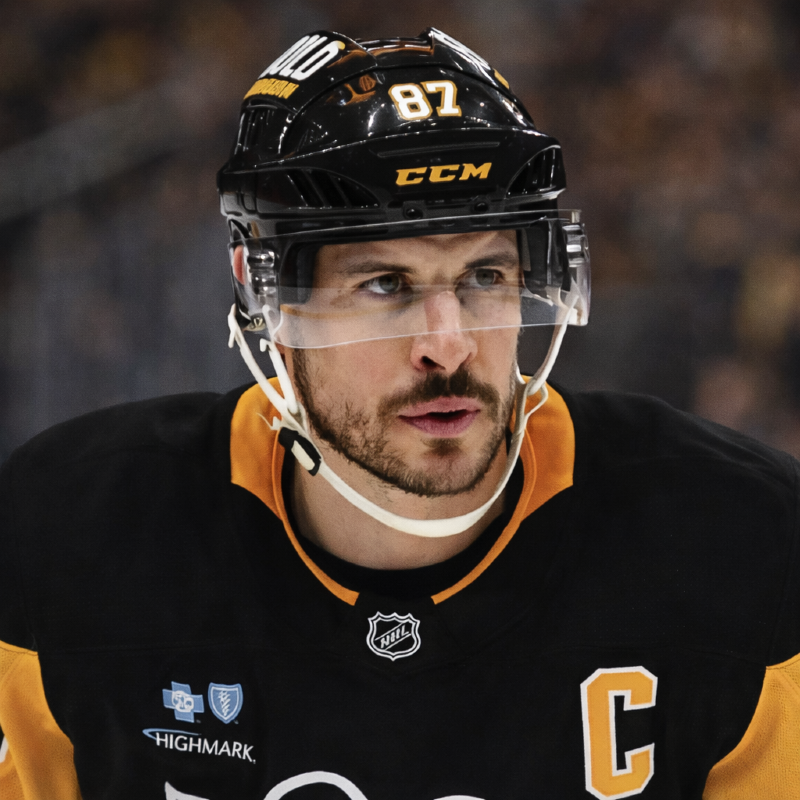
Crosby debuted in 2005-06 and immediately proved the hype was, if anything, undersold. He posted 102 points as a rookie — 39 goals, 63 assists — and finished as Calder Trophy runner-up. By his second season, at just 19, he won the Art Ross Trophy (120 points), the Hart Trophy, and the Ted Lindsay Award. Pittsburgh then named him captain — the youngest in NHL history. Let me put this in context: at an age when most NHLers are still figuring out the speed of the game, Crosby was already the best player in hockey and wearing the C.
The 2008-09 season delivered what felt inevitable: Crosby's first Stanley Cup at age 21, the youngest captain to hoist it since Steve Yzerman. But what came next nearly destroyed everything. On January 1, 2011, Washington's David Steckel blindsided Crosby at the Winter Classic. Four days later, Tampa Bay's Victor Hedman delivered another hit. The resulting concussion — a vestibular injury affecting balance and equilibrium — stole more than a calendar year of prime Crosby. He missed 48 games that season, returned briefly in 2011-12 for eight electric games, then shut down for another 40. When he came back against the Islanders on November 21, 2011, he scored two goals and two assists. The building shook. But I'd argue the real Crosby story isn't the comebacks — it's what the concussions stole from the record books. He missed 114 games in his prime. Without those injuries, we'd be debating whether he or Gretzky was the greatest — not whether he or McDavid is.
The dynasty years silenced any remaining doubt. In 2016, Crosby led the Penguins to the Stanley Cup and won the Conn Smythe. In 2017, he did it again — back-to-back Cups, back-to-back Conn Smythes, the first player to accomplish that since Mario Lemieux in the early '90s. He added 44 goals that regular season, a Maurice Richard Trophy, and the kind of postseason dominance (27 points in 24 games) that separates the great from the generational. Three Cups. Two Conn Smythes. The debate was over.
What makes Crosby's longevity genuinely absurd is the post-dynasty production. In 2023-24, at age 36, he scored 42 goals and 94 points. In 2024-25, he tallied 33 goals and 91 points. He's been a point-per-game player for 20 consecutive seasons — the longest streak in NHL history. Not Gretzky. Not Lemieux. Crosby. He did this while Pittsburgh rebuilt around him, cycling through linemates, coaches, and front office regimes. Crosby doesn't just produce; he produces regardless of context.
Crosby's 2025-26 Season: Olympics, Injury, and Pittsburgh's Surprise Run
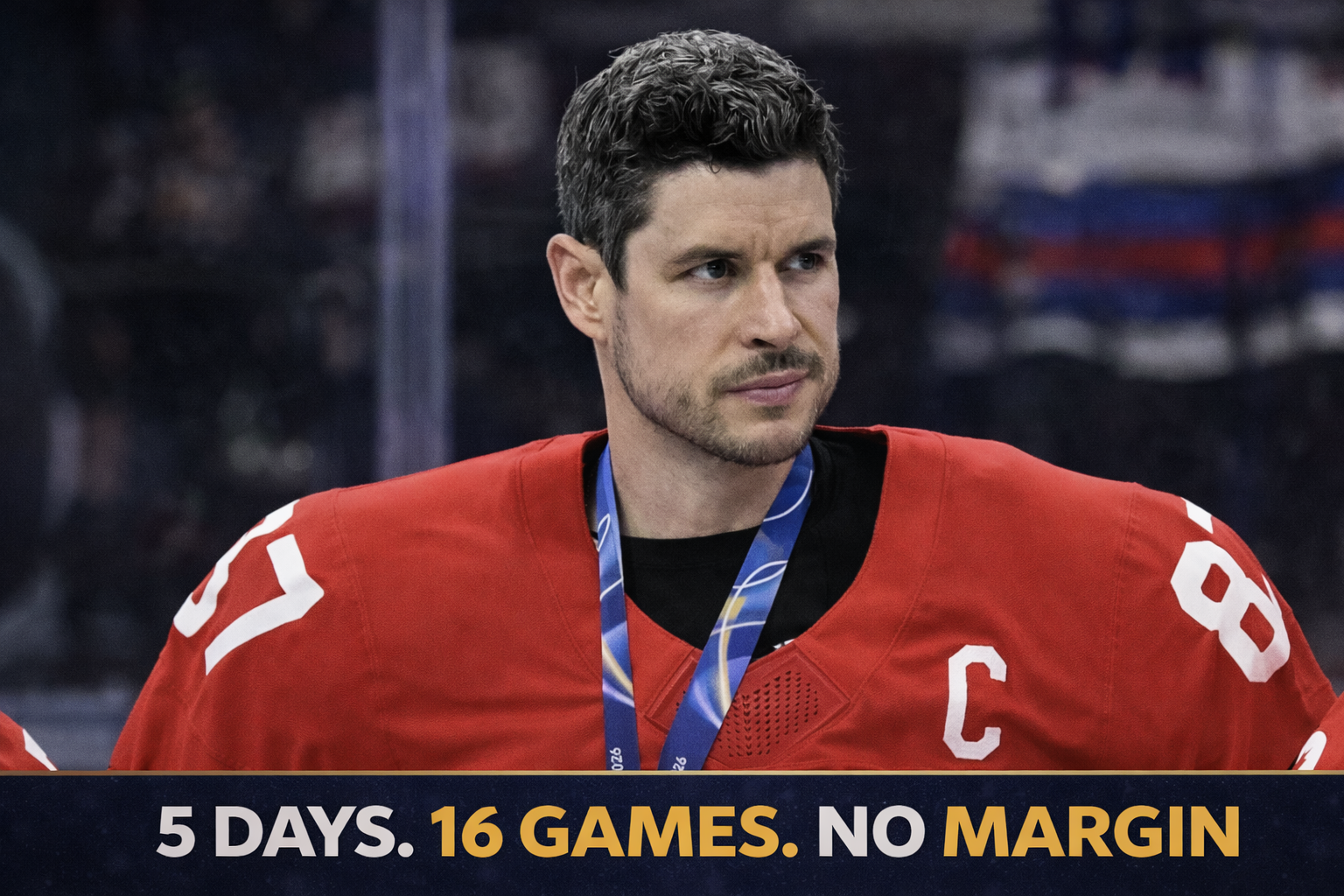
Before the Olympic break, Crosby was having another trademark season — 27 goals, 32 assists, 59 points in 56 games, a 1.05 points-per-game pace at age 38. Then Milan Cortina happened. Crosby captained Team Canada at the 2026 Olympics, but took two brutal hits from Czechia's Radko Gudas and Martin Necas in the quarterfinal. He left the game with a lower-body injury, watched Canada's semifinal loss to Finland from the training room, and returned to Pittsburgh on IR for a minimum of four weeks. Through 59 games this season, he has 28 goals and 63 points. The Penguins, surprisingly, are in the playoff picture — and the extension conversation is expected to happen this summer. Insider Josh Yohe of The Athletic reports Crosby "isn't going anywhere." My read: he'll sign through 2028-29 before the leaves change.
Off the Ice: The Most Private Superstar in Sports
Sidney Crosby has been in a relationship with model Kathy Leutner since 2008 — 18 years of near-total privacy in the age of social media. Leutner, who modeled for Sports Illustrated, Abercrombie & Fitch, and Hollister, has no public social media presence. Neither does Crosby. The Crosby family Foundation supports children's charities in both Pittsburgh and Nova Scotia, and Crosby is reportedly hands-on in the foundation's strategic planning. He was appointed an Officer of the Order of Canada in 2022. I've always said this about Crosby: he's the best player alive and also, by all accounts, genuinely uninteresting off the ice — which in a league full of drama queens and hot-take artists, might be his most impressive achievement. He lets the hockey talk. For 21 years, it hasn't stopped.