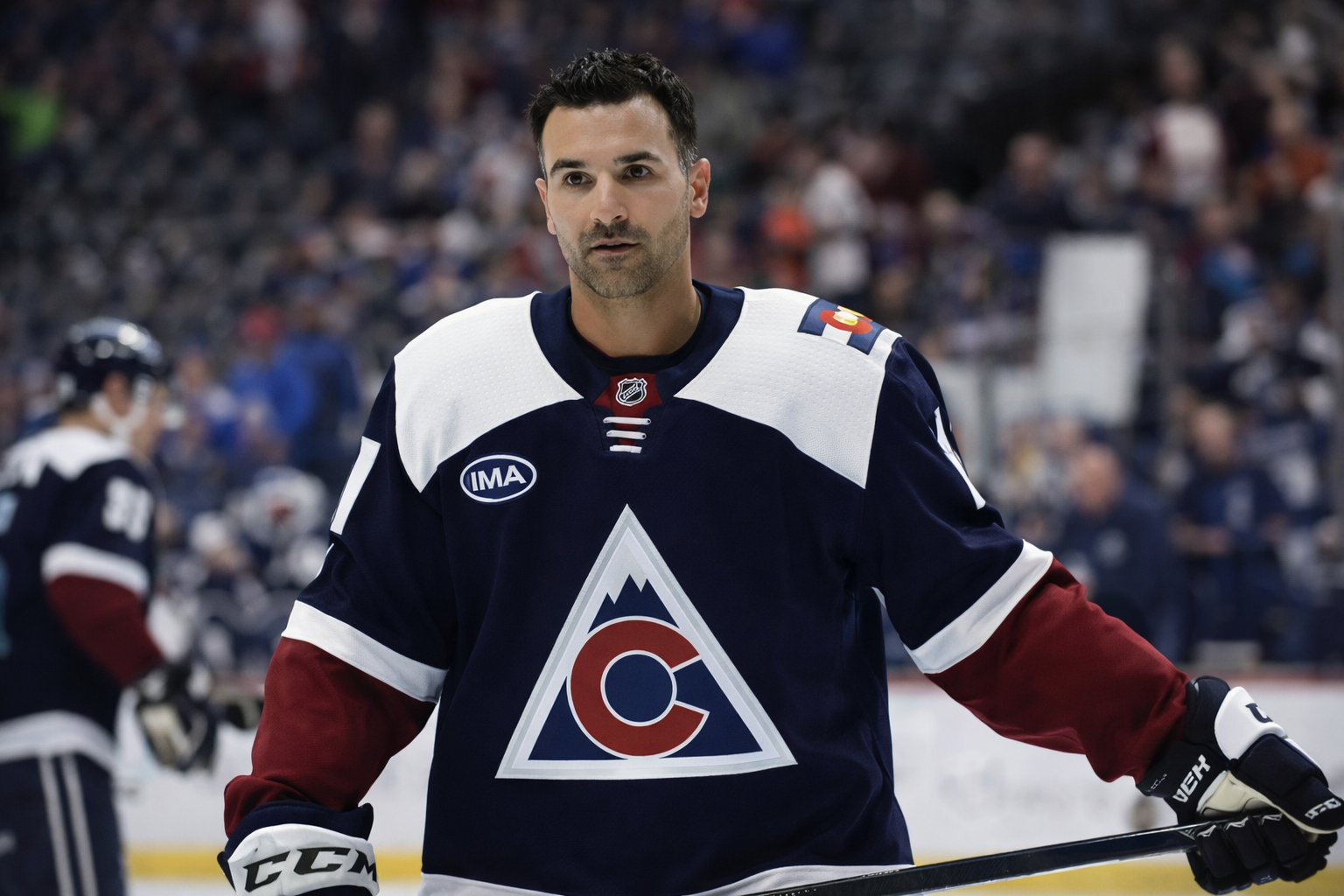
Makar's Early Life: From Calgary to the Hobey Baker
Cale Douglas Makar was born on October 30, 1998, in Calgary, Alberta — a city that produces hockey players the way Detroit produces cars. His father Gary and mother Laura MacGregor raised two hockey-obsessed sons in a house where the game was less a hobby than a religion. His younger brother Taylor would follow the same path, eventually signing an entry-level contract with the same NHL franchise.
What made Makar's development unusual wasn't the talent — you could see that by the time he was 16. It was the route. To preserve his NCAA eligibility, Makar skipped the major junior path entirely and joined the Brooks Bandits of the Alberta Junior Hockey League. In the AJHL. A league most NHL scouts treat as background noise. He won back-to-back championships, collected the league MVP, top defenceman, and CJHL Rookie of the Year awards, and put up 75 points in 54 games as a 17-year-old — numbers that forced scouts to recalibrate what they thought they knew about the AJHL's talent ceiling.
Then came UMass. Makar committed to the rebuilding Minutemen program and immediately became the best player in Hockey East. His sophomore season was absurd: he led the conference in scoring as a defenceman, was named Hockey East Player of the Year, and on April 12, 2019, won the Hobey Baker Award as the best player in college hockey. Three days later, he was in the NHL playoffs. Three days after that, he'd scored his first NHL goal. The 2017 draft class produced Nico Hischier and Nolan Patrick at 1-2 — Makar went fourth. I'd argue Colorado got the best player in that draft, and it's not particularly close.
Makar's NHL Career: A Point-Per-Game Defenceman From Day One
Most rookies need a season or two to adjust to the NHL. Makar needed a period. He debuted on April 15, 2019, in Game 3 of the first round against Calgary — and became the first defenceman in NHL history to score a goal in his playoff debut. That's not a typo. His first NHL game was a playoff game, and he scored. The Avalanche lost that series, but the message was clear: this kid was different.
His first full season in 2019-20 produced 50 points in 57 games and the Calder Trophy. Good rookies win the Calder. Makar won it playing 21 minutes a night and looking like he'd been in the league for a decade. The shortened 2020-21 season brought 44 points in 44 games — a point per game from a 22-year-old defenceman, which is the kind of rate only Bobby Orr and Paul Coffey sustained at that age.
Then came 2021-22, and I'd argue it's the single greatest individual season by a defenceman since Orr's prime. Makar put up 28 goals and 86 points in 77 regular-season games, won the Norris Trophy, then proceeded to dominate the playoffs with 29 points in 20 games — the fourth-highest postseason total by a defenceman in NHL history. He won the Conn Smythe. He won the Stanley Cup. He became only the third player ever to win the Norris and Conn Smythe in the same year, joining Orr (1970, 1972) and Nicklas Lidström (2002). He was 23 years old.
The years since have confirmed what that 2022 run suggested: Makar isn't having a moment. He's setting a standard. An injury-shortened 2022-23 still produced 66 points in 60 games. A healthy 2023-24 brought a career-high 90 points. And 2024-25 was his masterpiece in the regular season — 30 goals, 92 points, a +28 rating, and a second Norris Trophy. At 1.08 career points per game, he's tied with Paul Coffey for second all-time among defencemen behind Orr's 1.39. He reached 200 career points in 195 games — the fastest any NHL defenceman has ever done it, beating Sergei Zubov's 207-game mark.
"I mean, it's like comparing a Dodge to a Ferrari," Makar said when asked about the Orr comparisons. The self-deprecation is genuine. But here's the thing about that quote — he was the one who brought up the Ferrari. He knows exactly where he fits in this conversation, even if he's too polite to say it out loud.
2025-26 Season: 503 Career Points and Counting
Makar's current campaign has been typically excellent if slightly quieter than the year before — 20 goals and 75 points through 73 games, with a +29 rating that leads Colorado's blueline. The dip from 92 to 75 points has more to do with a recent upper-body injury that sidelined him in late March than any decline in quality. Early indications suggest the injury is not long-term, and he's expected back for the playoffs.
The bigger story is the milestone. Makar crossed 500 career points this season — reaching 503 in 468 games. For context, only five defencemen in NHL history reached 500 points faster. He's also watching his brother Taylor develop in the Colorado system after signing his own entry-level deal in March 2025, making the Makars the latest family act in an Avalanche organization that loves generational continuity.
The contract elephant in the room: Makar's six-year, $54 million extension expires after 2026-27. At $9 million AAV, it's already a bargain — he's been playing $14-16 million hockey on a $9 million deal. GM Chris MacFarland has approximately $42 million in projected cap space for 2027, and the first cheque he writes will have Makar's name on it. The only question is the number, and comparable extensions suggest it'll land somewhere north of $14 million AAV.
Off the Ice: The Quiet Superstar
Makar married his longtime girlfriend Tracy Evans in August 2024 in Boulder, Colorado. If you're looking for off-ice drama, you won't find it here. Makar is, by every credible account, the most boringly excellent human being in professional hockey. He plays NHL video games. He golfs in the summer. He trains with his brother. He does community work with young hockey players in Colorado. He once described his own playing style by comparing himself to a used car.
My read on Makar: he's the rarest kind of superstar — the kind who lets the game do all the talking and never seems bothered that the conversation about "best defenceman alive" always includes his name. Bobby Orr himself reached out after the 2022 Cup run. When the greatest defenceman in history acknowledges you unprompted, the Dodge-to-Ferrari comparison starts sounding less like humility and more like misdirection.