Matthew Knies Trade Deadline: Why Toronto Kept Him
Five teams had serious interest in Matthew Knies at the 2026 trade deadline. Toronto declined every offer while trading three veterans for picks. Here's what the five-team number actually means — and whether keeping him was the right call.

Live updates
No updates yet. Refreshing automatically.
Five teams called about Matthew Knies before the trade deadline. Anaheim, Chicago, Montreal, New Jersey, and Utah — every one of them made a run at the Leafs' 23-year-old winger, according to Elliotte Friedman's 32 Thoughts column on Sportsnet. Toronto picked up, listened, and said no to all of them. Then the Leafs turned around and traded three veteran forwards for draft picks in a 24-hour span — Nicolas Roy, Scott Laughton, Bobby McMann, all gone. The same organization that was clearly in seller mode drew a hard line on the one guy half the league wanted.
That line is either the smartest decision Brad Treliving made all year, or the one that will define this off-season in the worst possible way. Knies himself didn't seem too bothered: "I didn't really look into it too much," he told reporters. "With this market, everyone's kind of almost a target." That's a 23-year-old with 57 points through 66 games talking like a guy who knows his team needs him. And he's probably right.
The question isn't whether Knies had value at the deadline. Five teams answered that. The question is whether holding him made sense given Toronto's broader roster overhaul under Treliving — and given who was calling.
"Five teams had serious interest in Matthew Knies before the deadline."
— Elliotte Friedman, 32 Thoughts, Sportsnet
Key Takeaways
- Five teams had serious interest in Knies at the 2026 deadline — Toronto declined all offers
- Leafs traded Roy, Laughton, McMann for picks but kept their most valuable trade chip
- Knies: 57 points in 66 games at 18:52/night — projecting as a genuine first-line threat at 23
- The strategic contradiction: seller behavior everywhere except on their best young asset
- Contract ($7.75M × 6yr, no NTC/NMC) gives Toronto full control through 2031 — no urgency to move him
- If the Leafs exit Round 1, the five-team bidding war becomes a painful what-if
What Five Teams Calling About Knies Actually Means
The mix of teams Friedman named tells you something. Anaheim and Chicago are rebuilding. Montreal and Utah sit in that aggressive middle where they're trying to accelerate a timeline. New Jersey has been pushing its chips in all year. That's not one archetype — that's a cross-section of the league, from full tank to playoff contender, and they all saw Knies as someone worth acquiring. When rebuilding teams and contending teams both want the same player, you're looking at a guy with genuine franchise-level appeal.
Montreal's involvement is the most interesting. GM Kent Hughes said post-deadline he'd been working on something "significant" right down to the wire. Friedman noted Montreal "didn't go far down the road" on Knies, but the fact they were in the conversation at all raises the obvious question: was Kaiden Guhle part of the discussion? A 24-year-old left-shot defenseman is exactly the kind of asset Toronto's blue line has needed for two years. The Leafs didn't just say no to picks. They may have said no to a defense-for-offense swap that actually would have made structural sense.
Now look at it from the pricing side. When one team calls about a player, the asking price is whatever the seller demands. When five teams call, you're in an auction. The price becomes whatever the second-highest bidder is willing to pay — and then you go back to the leader and beat it. Five serious suitors for a 23-year-old winger with 57 points on a team-friendly long-term deal doesn't produce a late first-round pick. It produces a top-15 pick plus a legitimate prospect, or a young roster player coming back the other way. For context, here's what Toronto received for the veterans they actually moved on March 5-6:
| Player Moved | Return Received | Age | Contract Status |
|---|---|---|---|
| Nicolas Roy → Colorado | 2027 cond. 1st + 2026 5th (+ Fraser Minten) | 28 | UFA rental |
| Scott Laughton → LA Kings | Cond. 3rd (→2nd if LAK playoffs) | 31 | UFA rental |
| Bobby McMann → Seattle | 2027 cond. 2nd + 2026 4th | 28 | UFA rental |
| Matthew Knies (kept) | Projected: 1st + prospect minimum | 23 | 6yr × $7.75M (no NTC/NMC) |
Source: NHL.com official transactions, March 5–6, 2026. Knies projected value based on comparable winger trades in a five-team bidding situation.
The age and contract columns tell the story on their own. Every player Toronto moved was a rental on an expiring deal — guys who walk in July. Knies is 23 with six years of team control at $7.75 million. That's a fundamentally different asset class. Toronto got a conditional first for Nicolas Roy, and they had to include Fraser Minten — a 21-year-old prospect — to get it done. Knies, in a five-team auction, would have returned substantially more. That's not a criticism yet. But it tells you what Toronto left on the table.
The Two Philosophies That Shouldn't Coexist
The contradiction here is hard to ignore. You don't trade Roy, Laughton, and McMann in a single day if you're in win-now mode. Those are depth forwards who contribute to playoff runs. Moving all three — plus a prospect like Minten — for picks is a clear organizational message: the future matters more than this year's conference quarterfinal.
And then you keep your most valuable trade chip.
Look, the two explanations that make sense are that Toronto sees Knies as genuinely untouchable because of what he does for the current roster, or they believe the $7.75 million AAV on a six-year deal with no trade protection gives them enough control to move him whenever they want on their own timeline. Both things can be true simultaneously. But you can't also be shipping out three veterans for picks and pretend there's a single coherent vision driving these decisions. There isn't one. The Knies hold was a separate calculation from everything else that happened that week.
The same physicality-first identity Berube has been building is exactly what makes Knies valuable — and exactly why losing him would have undercut the direction Toronto claims to be heading.
Nick Kypreos made a point on Sportsnet that I think gets underappreciated: Knies could command a better return than Auston Matthews or William Nylander in a trade scenario, because those two carry full no-movement clauses. The acquiring team negotiates with the player as much as with Toronto. With Knies, Toronto controls the entire process. No veto, no limited lists, no leverage for the player. That's an enormous advantage in a trade negotiation, and it's part of why five teams — not two, not three, five — were willing to engage seriously.
The one scenario where the whole deadline makes sense: Toronto is betting on a deep playoff run with Knies in the lineup, then re-signing or re-evaluating in the summer with full control of the asset. If the playoffs go sideways, they still have a 23-year-old under contract through 2031 with no trade protection. The asset doesn't depreciate. That's a calculated gamble, and unlike most gambles, this one has a safety net.
Why $7.75 Million With No Protection Is the Whole Story
Forget the "will he or won't he be traded" framing for a second. The contract Knies signed in June 2025 — six years, $7.75 million AAV, $46.5 million total, no NMC, no NTC — is the single most important variable in every conversation about his future. It explains why five teams were interested. It explains why Toronto felt comfortable saying no. And it explains why this summer could get even more interesting than the deadline was.
Think about what no trade protection means in practice. If Treliving decides in July that moving Knies is the right call, he doesn't need permission. No list of preferred destinations. No veto power. Just a phone call and a negotiation. The acquiring team gets six years of a 23-year-old winger at a salary cap mechanics that's going to look more and more reasonable as the salary cap continues climbing. That's the kind of asset that starts a bidding war in March and an even bigger one in August.
Kypreos named Montreal, Chicago, and Utah as the three teams most likely to re-engage this summer. Montreal especially — if Kent Hughes is serious about accelerating, a guy like Knies on a team-friendly long-term deal is the exact profile you target. And the Guhle question hangs over all of it. Toronto's defensive needs are not subtle. A 24-year-old left-shot defenseman with term control for a 23-year-old scoring winger with term control — that's the kind of trade both teams could talk themselves into.
Frank Seravalli confirmed on the FAN Morning Show that conversations about Knies happened during the deadline window, though he added he was "not entirely sold" that discussions reached their final stages. That tracks. Toronto was never desperate to move him. The question was always whether someone would overpay enough to force the issue, and the answer — for now — was no.
What Knies Actually Means for Toronto's Playoff Run
Here's the on-ice argument for keeping him, and it's hard to dismiss. Knies has 57 points in 66 games this season — one point shy of his career high set over a full 82-game slate last year, and he still has 16 games left. He's second in team scoring. At 18:52 per night with over 100 hits, he's a top-line winger who also happens to play a physical game that translates well to the postseason. You don't find that combination on waivers.
The production metrics back up what the five teams were responding to. Knies is shooting 14.4% on 125 shots — above the league average for forwards and sustainable enough that you can't dismiss it as a hot streak. His 12 power-play points confirm he's trusted in high-leverage situations, not just riding 5-on-5 minutes. And with Auston Matthews out for the season after the Gudas incident, Knies isn't just a complementary piece anymore — he's carrying primary offensive responsibility at 23.
His -16 plus/minus is ugly but misleading. Toronto's defensive structure has been a problem all season, and wingers are the first to absorb that number when the blue line isn't holding leads. That's a team issue, not a Knies issue.
What he gives the Leafs in the playoffs is a genuine offensive engine — someone who can carry a shift by himself, protect the puck down low, and finish. The comparable that comes to mind is what Artturi Lehkonen did for Colorado in 2022: a winger who wouldn't blow you away on the stat sheet but who made the team fundamentally harder to play against in a seven-game series. Knies is better offensively than Lehkonen was at the same age, and he's bigger. Five teams understood that.
There's one more roster context that nobody seems to be talking about. Toronto already sent out Fraser Minten — a 21-year-old prospect — in the Roy package. If they'd also moved Knies, the Leafs would have essentially no one under 25 in the organization except Easton Cowan. You can sell at the deadline, but you cannot sell the entire future. Treliving stopped before it went that far. Whether that was vision or just self-preservation probably depends on your opinion of how the next six weeks go.
What Happens If Toronto's Wrong
Five teams calling about a 23-year-old winger at the trade deadline is not a rumor footnote. It's the clearest market signal Brad Treliving has received about any player on this roster. Anaheim, Chicago, Montreal, New Jersey, Utah — these weren't tire-kickers. Every one of them had prospect capital, draft picks, and genuine motivation to acquire Knies.
The Leafs heard all of it and decided the player was worth more in their lineup than any package those teams could offer. They might be right. If the playoffs go well, this looks like a franchise-defining hold — the moment Toronto stopped treating young talent as trade currency and started building around it. If it goes sideways, every one of those five teams will remember what was available and what they were willing to pay. And Treliving won't be able to say he did not know.
For more on how key player decisions are shaping the 2026 playoff race, read our Draisaitl injury breakdown.
Companion read:
Toronto's roster math after winning the 2026 lottery only sharpens the Knies trade-or-keep question, since McKenna or Stenberg adds another cheap top-six winger to the depth chart.
Frequently Asked Questions
Why didn't the Leafs trade Matthew Knies?
Knies is 23 with six years at $7.75M and no trade protection — a rare asset Toronto fully controls. With 57 points in 66 games, the Leafs decided no deadline package exceeded what he gives them in the playoffs. They also didn't want to strip the organization of every young asset after already dealing Fraser Minten in the Roy trade.
What teams were interested in Matthew Knies at the 2026 deadline?
Anaheim, Chicago, Montreal, New Jersey, and Utah all had serious interest, per Friedman's 32 Thoughts on Sportsnet. Montreal's Kent Hughes said post-deadline he was working on something "significant" down to the wire, though Friedman noted they didn't get far down the road on Knies specifically.
What is Matthew Knies' contract?
Six-year extension signed June 2025, $7.75M AAV ($46.5M total), running through 2030-31. Crucially: zero trade protection — no NMC, no NTC. That gives Toronto complete control over any future trade without needing Knies' consent.
Could Knies still be traded this summer?
Yes, and Nick Kypreos reported he could fetch a better return than Matthews or Nylander because he lacks trade protection — Toronto controls the process. Kypreos named Montreal, Chicago, and Utah as the most likely re-engagers. Whether the Kaiden Guhle conversation with Montreal actually materializes remains the most interesting potential summer domino.
Is Matthew Knies worth more than a first-round pick?
Almost certainly. A 23-year-old winger with 57 points drawing five simultaneous serious suitors commands more than a single conditional first based on comparable trades. Toronto got a conditional first for Nicolas Roy — and had to include a prospect to get it. Knies, in a five-team auction, projects at a top-15 pick plus a legitimate young roster player coming back.
Sources and Reporting
- Sportsnet — Elliotte Friedman, 32 Thoughts: Five teams with serious interest in Knies at deadline
- Sportsnet — Nick Kypreos on Knies' trade value advantage over Matthews/Nylander
- NHL.com — Maple Leafs trade Nicolas Roy to Colorado Avalanche, March 5, 2026
- NHL.com — Maple Leafs trade Scott Laughton to Los Angeles Kings, March 6, 2026
- NHL.com — Maple Leafs trade Bobby McMann to Seattle Kraken, March 6, 2026
- PuckPedia — Matthew Knies contract details ($7.75M × 6yr, no trade protection)
- NHL.com — Matthew Knies 2025-26 season stats
- Natural Stat Trick — Toronto Maple Leafs 5v5 defensive metrics, 2025-26
Frequently Asked Questions
Why didn't the Leafs trade Matthew Knies?
Knies is 23 with six years at $7.75M and no trade protection — a rare asset Toronto fully controls. With 57 points in 66 games, the Leafs decided no deadline package exceeded what he gives them in the playoffs. They also didn't want to strip the organization of every young asset after already dealing Fraser Minten in the Roy trade.
What teams were interested in Matthew Knies at the 2026 deadline?
Anaheim, Chicago, Montreal, New Jersey, and Utah all had serious interest, per Friedman's 32 Thoughts on Sportsnet. Montreal's Kent Hughes said post-deadline he was working on something "significant" down to the wire, though Friedman noted they didn't get far down the road on Knies specifically.
What is Matthew Knies' contract?
Six-year extension signed June 2025, $7.75M AAV ($46.5M total), running through 2030-31. Crucially: zero trade protection — no NMC, no NTC. That gives Toronto complete control over any future trade without needing Knies' consent.
Could Knies still be traded this summer?
Yes, and Nick Kypreos reported he could fetch a better return than Matthews or Nylander because he lacks trade protection — Toronto controls the process. Kypreos named Montreal, Chicago, and Utah as the most likely re-engagers. Whether the Kaiden Guhle conversation with Montreal actually materializes remains the most interesting potential summer domino.
Is Matthew Knies worth more than a first-round pick?
Almost certainly. A 23-year-old winger with 57 points drawing five simultaneous serious suitors commands more than a single conditional first based on comparable trades. Toronto got a conditional first for Nicolas Roy — and had to include a prospect to get it. Knies, in a five-team auction, projects at a top-15 pick plus a legitimate young roster player coming back.
Related Stories

How Do Line Changes Work in Hockey?
A line change is hockey's strangest routine: you swap players while the puck is live, but only inside a five-foot pocket beside your own ben...
By Mike Johnson · 10 min read

What Is the Long Change in Hockey?
The long change is not jargon, it is bench geography. Teams switch ends each period but keep the same bench, so in the second period a tired...
By Mike Johnson · 9 min read
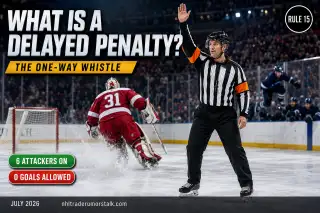
What Is a Delayed Penalty in Hockey?
A delayed penalty is not a penalty yet. It is the referee holding the whistle after a foul until the penalized team touches the puck, which...
By Mike Johnson · 9 min read
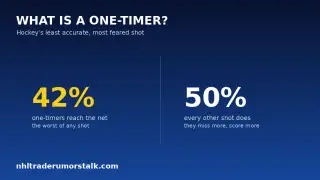
What Is a One-Timer in Hockey?
A one-timer reaches the net just 42% of the time, the worst of any shot, yet it is the most dangerous weapon in hockey and the shot Ovechkin...
By Mike Johnson · 11 min read
Comments
Be the first to share your take.
Get NHL trade rumors in your inbox
One email per week, zero spam, verified rumors only.