Early Life and the Road from Moscow
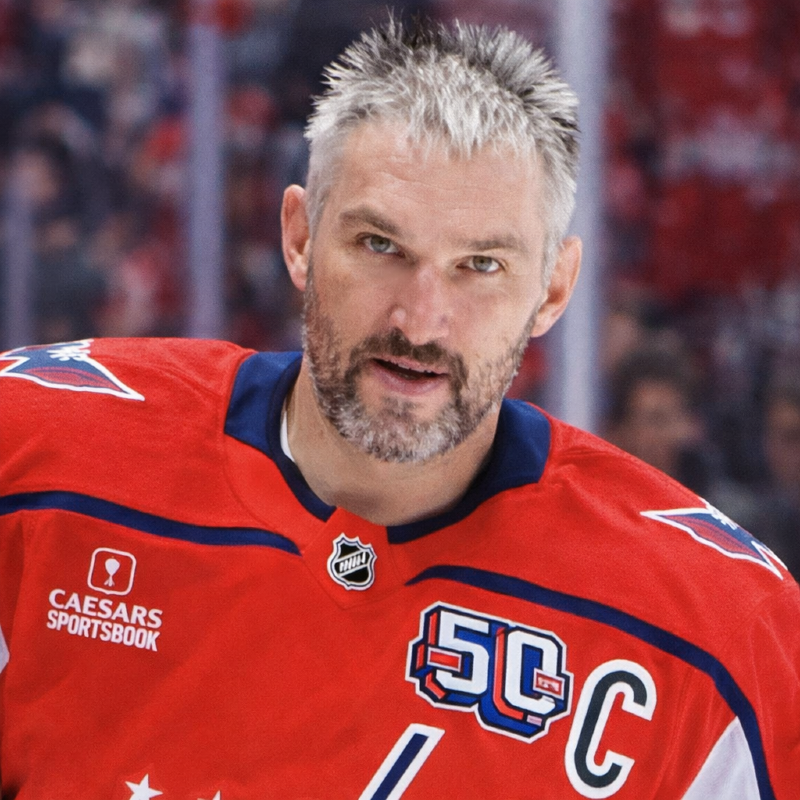
Alexander Mikhailovich Ovechkin was born September 17, 1985, in Moscow, to a family that practically breathed elite sport. His mother Tatyana won two Olympic gold medals with the Soviet women's basketball team in 1976 and 1980. His father Mikhail played professional soccer. The genetic lottery was rigged in his favor before he ever touched a hockey stick.
Ovechkin grew up in a crumbling high-rise on the outskirts of Moscow, attended public school No. 596 — infamous for military-grade discipline — and entered Dynamo Moscow's sports school before finishing ninth grade. At 10 years old, he lost his older brother Sergei to a blood clot following a car accident. His parents insisted he play his hockey game the next day. He played. That tells you everything about how Ovechkin processes pain: you don't stop. You score.
Inside the Dynamo Moscow system, Ovechkin scored 56 goals at age 11 — shattering the youth record previously held by Pavel Bure, who managed 53. He made his Russian Super League debut at 16, putting up 4 points in 21 games against grown men during the 2001-02 season. By 18, he was the youngest player to ever lead Dynamo Moscow in scoring and won the RSL's best left winger award. The NHL was watching. Everyone was watching.
The 2004 NHL Draft was supposed to be a two-horse race between Ovechkin and Evgeni Malkin. It wasn't close. Washington selected Ovechkin first overall — a pick the franchise had been dreaming about since winning the draft lottery. He'd been projected first overall for nearly two years, drawing comparisons to Mario Lemieux. The lockout delayed his arrival by a full season. When he finally showed up — much like today's top prospects entering the league — he made the wait look foolish.
NHL Career: 20 Seasons of Violence and Poetry
Ovechkin's NHL debut on October 5, 2005, produced two goals against Columbus — a statement that this wasn't going to be a gradual adjustment. He finished his rookie season with 52 goals and 106 points, winning the Calder Trophy in a year where Sidney Crosby — drafted one pick after him in 2005 — also entered the league. The Ovechkin-Crosby-McDavid lineage would define two generations of hockey. The Ovechkin-Crosby rivalry would define the first. I'd argue Crosby won more. Ovechkin scored more. And the distinction matters.
The 2007-08 season remains the most dominant offensive performance I've ever watched from a winger. Ovechkin scored 65 goals and 112 points, winning the Hart Trophy, Art Ross Trophy, and Rocket Richard Trophy in the same year. He scored from the left circle. He scored from the right circle. He scored on his backhand from behind the net. He scored on breakaways where the goalie had zero chance. He won the Hart again in 2009 — and frankly, he should have won it in 2010 too, when he put up 50 goals and 109 points on a team that won the Presidents' Trophy.
The playoff failures haunted him for a decade. Washington was eliminated in the second round five times between 2008-2017, including three Game 7 losses to Pittsburgh — the kind of playoff heartbreak that haunts franchise players across the league. The narrative calcified: Ovechkin was a regular-season player who couldn't win when it mattered. I bought into it. I was wrong.
The 2018 Stanley Cup run didn't just change Ovechkin's legacy — it destroyed every criticism ever leveled at him. He scored 15 goals and 27 points in 24 playoff games, won the Conn Smythe Trophy, and celebrated by taking the Cup to every bar, pool party, and fountain in the greater Washington metropolitan area. The image of Ovechkin cradling the Cup in a fountain at 3 AM, shirtless and screaming, is the most authentic moment of joy in the history of professional sports. My read: that Cup validated 13 years of heartbreak in a single June night.
After 2018, the goal chase consumed everything. Ovechkin passed Gordie Howe's 801 goals in December 2022. He tied Wayne Gretzky's 894 on April 4, 2025, with two goals against Chicago. Two days later, he broke the record with goal number 895 against the Islanders — a wrist shot from his power-play office in the left circle, because of course it was. He belly-flopped onto the ice and slid past the blue line. Twenty years of scoring, and the celebration was still a 10-year-old kid's reaction.
The 2025-26 Season: 926 Goals and Counting
At 40, Ovechkin has 29 goals and 56 points in 73 games this season. He's one goal from his 20th career 30-goal season — a record he already owns and keeps extending. The pace has slowed. The average time on ice has dipped to 17:31. His 5-on-5 Corsi numbers have declined. None of that matters. He's still scoring 29 goals at an age when most players are coaching peewee.
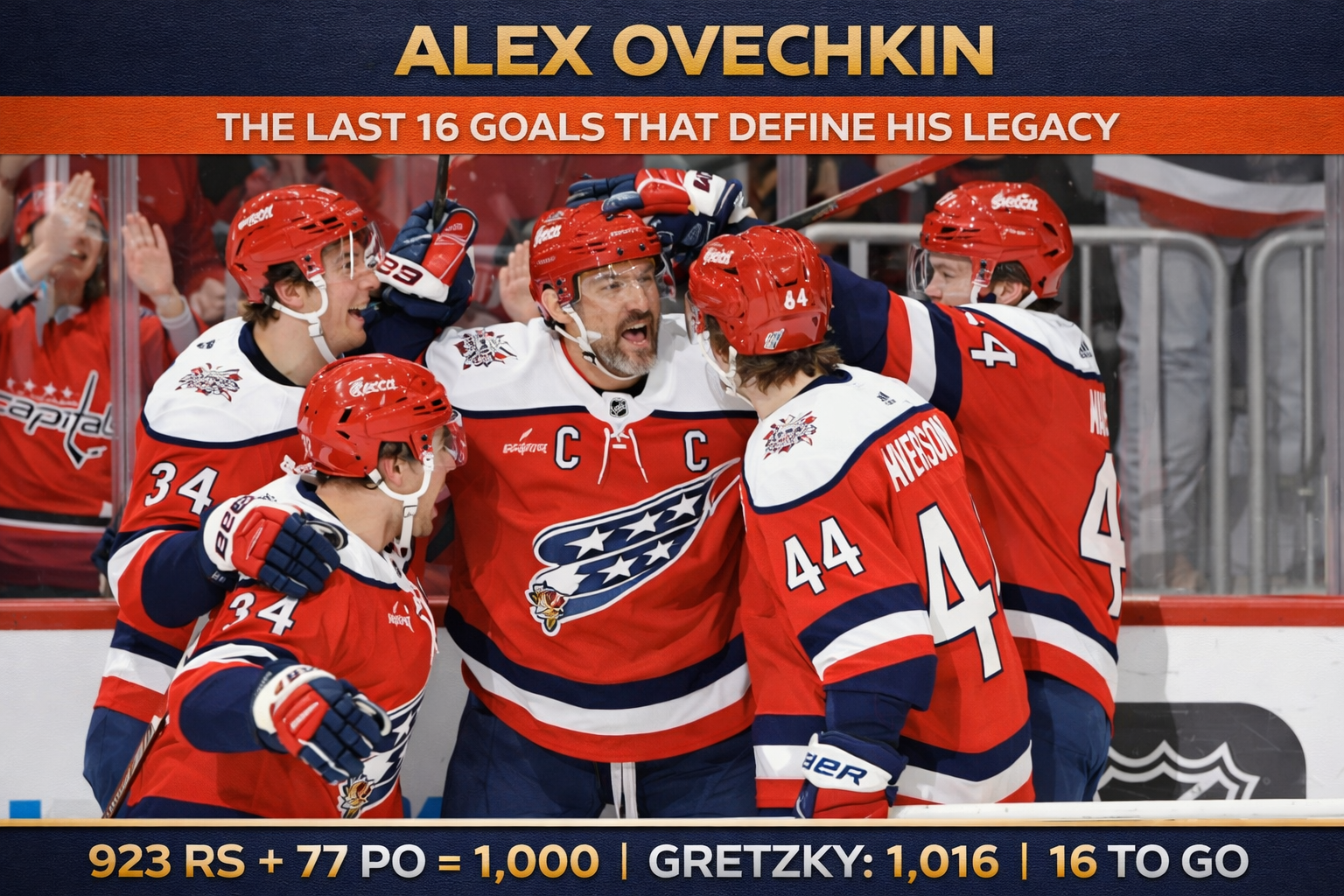
The broken fibula he suffered in November 2024 cost him 16 games — the longest absence of his career — but he returned in late December and immediately resumed scoring. He reached 1,000 combined goals (923 regular season + 77 playoff) in March 2026, a milestone so absurd that nobody had seriously contemplated it until Ovechkin made it look inevitable. His contract expires this summer. He'll be a UFA. The only question is whether Washington re-signs him — he's among the top pending UFAs of 2026 — because retirement isn't happening yet.
Off the Ice: Family, Loss, and Legacy
Ovechkin married Anastasia Shubskaya in 2016 — a Russian model and film producer he first met at the 2008 Beijing Olympics, lost touch with, and reconnected with via Instagram in 2015. He proposed while she was in the shower, bursting in mid-shampoo with a ring. They have two sons: Sergei, born in 2018 and named after Ovechkin's late brother, and Ilya, born in 2020.
His charity work runs deep. The Alex Ovechkin Foundation has operated since 2008. His Ovi's 8's program has provided over 6,000 free game tickets to underserved children in the D.C. area. His GR8 CHASE for Victory Over Cancer initiative donates to pediatric cancer research for every goal he scores. He won the Mark Messier Leadership Award in 2025. Ovechkin is the greatest goal scorer who ever lived, a Stanley Cup champion, and a man who names his firstborn after the brother he lost at 10 years old. The legacy writes itself.