Predators Rejected Stamkos Trade — Why Trotz Said No
Predators rejected Stamkos trade offers at the 2026 deadline. Trotz turned down "really good" deals as Stamkos refused to waive his NMC. With 31 goals at 36 and Nashville in the wild card hunt, Trotz kept his core intact.
Live updates
No updates yet. Refreshing automatically.
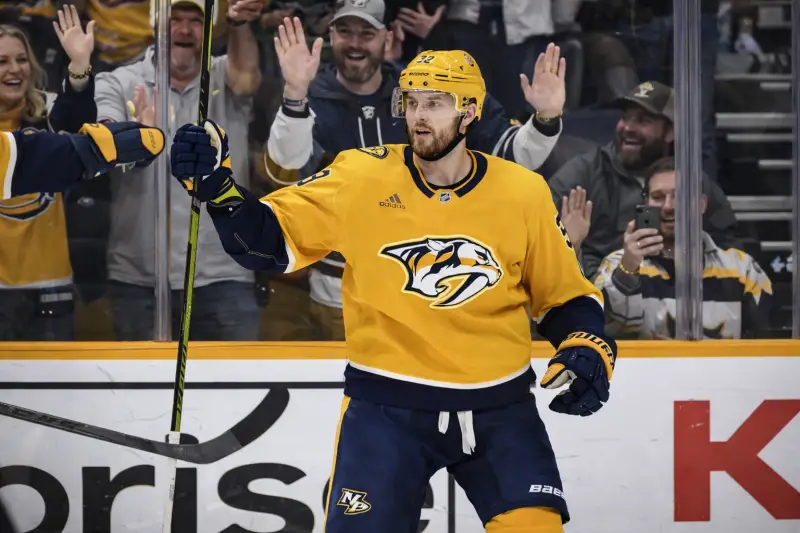
The Predators rejected Stamkos trade offers from multiple teams at the 2026 NHL trade deadline — and GM Barry Trotz isn't losing sleep over it. Nashville's front office confirmed they turned down "really good offers" for the 36-year-old sniper, who has 31 goals and 51 points through 65 games this season while carrying a full no-movement clause he had absolutely zero intention of waiving. With the Predators clawing their way back into the Western Conference wild card race after a disastrous start, Trotz chose loyalty and a playoff push over asset accumulation.
Bold move. Risky move. And the kind of decision that will either look brilliant by mid-April or haunt Nashville's front office all summer.
Why Nashville Turned Down Offers for Stamkos
Trotz didn't sugarcoat the level of interest. "There were a lot of calls on Stamkos," the GM told reporters after the March 7 deadline passed. "He's hot, and he's got to stay hot because we're in a playoff race."
The calls weren't just tire-kicking, either. Trotz acknowledged he declined "really good offers" — and not just for Stamkos. The Predators also fielded and rejected significant proposals for veteran forwards Ryan O'Reilly and Erik Haula. Three core players, three sets of offers, three times Trotz said no.
But here's the thing most people are missing: it might not have mattered what any team offered. Stamkos holds a full no-movement clause in his four-year, $32 million contract, and he made his position crystal clear weeks before the deadline. "I haven't talked to (GM Barry Trotz) at all about that," Stamkos told The Tennessean when asked about a potential trade. When pressed further, he didn't hedge. "Zero" chance he'd waive the NMC.
Zero. Not "unlikely." Not "I'd have to think about it." Zero.
"With this group, we want to be together," Stamkos said. "I can only control what I can control, but I love being here."
That kind of definitive statement from a player with full contractual protection effectively ended the conversation before it started. Trotz could have received a package of first-round picks and blue-chip prospects — it wouldn't have mattered if Stamkos wasn't willing to go. And he wasn't.
Stamkos's Resurgent 2025-26 Campaign
The reason phones were ringing in Nashville is obvious: Stamkos is playing some of the best hockey of his post-Tampa career.
At 36 years old, in his second season with the Predators, Stamkos has potted 31 goals and 20 assists for 51 points in 65 games. That's a 0.78 points-per-game clip — remarkable production for a player many assumed was in decline when he left the Lightning.
And then there's the milestone that puts his season in historical perspective. Stamkos scored his 600th career NHL goal this season, becoming just the 22nd player in league history to reach that mark and only the third active player in the 600-goal club. His career totals now sit at 613 goals and 1,241 points across 1,229 games — numbers that virtually guarantee a first-ballot Hall of Fame induction whenever he decides to hang them up.
The early-season struggles were real, though. Stamkos managed just two points — one goal, one assist — in the entire month of October. The critics sharpened their knives. The $8 million AAV looked like an overpay. Nashville looked like a team that had bet on nostalgia instead of production.
Then Stamkos caught fire. From November through March, he's been one of the most dangerous goal-scorers in the Western Conference, with 9 power play goals anchoring Nashville's man advantage. His 17:44 of average ice time per game isn't top-line heavy, but his efficiency per minute is exceptional. He's tied for 16th in the league in goals despite playing fewer minutes than most of the players above him.
"We want to play in meaningful hockey games and we're playing in meaningful hockey games right now," Stamkos said. At 36, with two Stanley Cup rings already in his pocket, he's not chasing a trade to a contender. He wants to make Nashville the contender.
Nashville's Remarkable Turnaround
To understand why Trotz rejected those offers, you have to understand where this team was three months ago.
On December 1, the Predators were 8-13-4. Dead last. The vibes were funereal. The offseason spending spree — Stamkos, Jonathan Marchessault, Brady Skjei — looked like a catastrophic miscalculation. Fans were calling for a full teardown. Pundits were writing Nashville's obituary.
Then something shifted. The defense tightened. Juuse Saros started stealing games. Stamkos found his rhythm. And slowly, painfully, the Predators started climbing. By the trade deadline, Nashville had clawed their way to 27-24-7 — 66 points and sitting just one to two points outside a Western Conference wild card berth.
That's a 19-11-3 run over roughly three months. From 25th in the league to playoff contention. From "sell everything" to "maybe we've got something here."
Trotz saw that trajectory and made a judgment call: this group deserved a shot. Whether that shot actually materializes into a playoff berth is a different question entirely — Stathletes still gives Nashville only a 6.9% chance of making the postseason — but the decision wasn't irrational. It was emotional, sure. But it was backed by real on-ice evidence.
Key Takeaways
- Trotz rejected "really good offers" for Stamkos, O'Reilly, and Haula — three separate players, three separate packages declined
- Stamkos's NMC was the real barrier: He said there was "zero" chance he'd waive his full no-movement clause, effectively making him untradeable regardless of offers
- 31 goals at age 36: Stamkos is having a resurgent season after a brutal October, ranking tied-16th in the NHL in goals
- 600-goal milestone: Stamkos became just the 22nd player in NHL history to reach the mark this season, with 613 career goals and 1,241 career points
- Nashville's turnaround is real: From 8-13-4 (last place) on Dec. 1 to playoff contention at the deadline with a 19-11-3 run
- Only depth pieces were moved: Bunting, McCarron, Smith, and Blankenburg traded for draft picks — no core players shipped out
- Playoff odds remain slim: Despite the turnaround, Nashville's postseason probability sits at just 6.9% per projection models
The Trades Nashville Actually Made
While Trotz held firm on his top players, the Predators weren't completely inactive. Four trades went through — all involving depth pieces on expiring contracts:
| Player | Destination | Return |
|---|---|---|
| Michael Bunting | Dallas Stars | 2026 3rd-round pick |
| Michael McCarron | Minnesota Wild | 2028 2nd-round pick |
| Cole Smith | Vegas Golden Knights | 2028 3rd-round pick + Christoffer Sedoff |
| Nick Blankenburg | Colorado Avalanche | 2027 5th-round pick |
The total haul: a second-rounder, two third-rounders, a fifth-rounder, and a defensive prospect. Not nothing — but not the kind of return that reshapes a franchise, either.
The McCarron deal stands out as the best value. A second-round pick in 2028 for a fourth-line forward is solid work. The Bunting return feels light — he's a capable middle-six winger who'd been producing — but on an expiring deal with limited leverage, a third-rounder is roughly market value.
What's notable is what these trades represent strategically. Trotz trimmed the fat without touching the bone. He removed players who weren't part of the long-term plan while keeping the veterans he believes give Nashville a playoff chance right now. It's a "have your cake and eat it too" approach — and it's exactly the kind of half-measure that gets scrutinized heavily if the team falls short.
Stamkos's $8M Cap Hit and What It Means
The financial dimension of this decision can't be ignored. Stamkos carries an $8 million AAV through 2027-28 — two more full seasons after this one. Nashville's current cap space sits at approximately $7.3 million, meaning the Predators are running right up against the ceiling with Stamkos's number eating a significant chunk.
Here's the full contract breakdown:
- Total value: $32 million over 4 years
- AAV: $8 million
- Clause: Full no-movement clause (entire term)
- Expiry: End of 2027-28 season (UFA at 38)
- Signed: July 1, 2024
For context, $8 million buys you a legitimate first-line center or a top-pair defenseman on most rosters. Stamkos is producing like a high-end second-liner — 31 goals is excellent, but 51 points and a minus-19 rating tell a more complicated story. The goal-scoring is elite. The all-around game has gaps.
The NMC makes the contract essentially immovable without Stamkos's cooperation. And as we've established, that cooperation isn't coming. So Nashville is locked into this cap hit through age 38, for better or worse. If Stamkos keeps scoring 30-plus goals, it's a defensible number. If he falls off a cliff — and at 36, that cliff can appear suddenly — the Predators are stuck with a bad contract and no escape hatch.
That's the gamble Trotz is making. He's betting that Stamkos's competitive fire and goal-scoring ability will hold up long enough for Nashville's window to stay open.
What Happens If Nashville Misses the Playoffs
This is the question that should keep Trotz up at night.
If the Predators make the playoffs and put together a competitive first-round series, the deadline strategy looks smart. You rewarded your veterans, kept the room together, and gave a resilient group a shot. That narrative writes itself.
But if Nashville falls short — and a 6.9% playoff probability suggests that's the more likely outcome — the scrutiny will be intense. As one Predlines analysis put it bluntly: "If this team misses the playoffs after not cashing in fully at the trade deadline, then it's going to be one last blemish on Trotz's short tenure."
The summer conversations would get ugly fast. Stamkos can't be moved without his consent. O'Reilly has one year left at $4.5 million — a movable piece, but one that diminishes in value with each passing month. And then there's the biggest name: Roman Josi. Multiple rumor roundups have already connected Josi to potential offseason trades if Nashville misses the postseason. The franchise's all-time great defenseman being shopped would signal a full-scale rebuild — the exact outcome Trotz was trying to avoid by keeping everyone at the deadline.
The Predators have 17 games remaining and face playoff-caliber opponents in 10 of them. The margin for error is razor-thin. Every point matters. And the weight of Trotz's deadline decision rides on every single one of those games.
The Predators rejected Stamkos trade offers because they believed this group could do something special down the stretch. Now they have to prove it — or face an offseason reckoning that makes the deadline look like the easy part.
Frequently Asked Questions
Why did the Predators reject trade offers for Steven Stamkos?
GM Barry Trotz turned down "really good offers" because Nashville was in the middle of a playoff push after climbing from last place in December to wild card contention. Stamkos also refused to waive his full no-movement clause, making any trade impossible without his consent.
Does Steven Stamkos have a no-trade clause?
Stamkos has a full no-movement clause in his four-year, $32 million contract with the Predators. He stated publicly there was "zero" chance he'd waive it, effectively making him untradeable before the 2026 deadline.
What is Steven Stamkos's contract with the Predators?
Stamkos signed a four-year, $32 million deal ($8 million AAV) with Nashville on July 1, 2024. The contract includes a full no-movement clause and runs through the 2027-28 season, when Stamkos will be 38 years old.
How many goals does Steven Stamkos have in his career?
Stamkos has 613 career NHL goals through 1,229 games, making him the 22nd player in league history to reach 600 goals. He also has 1,241 career points and is a two-time Rocket Richard Trophy winner.
Are the Nashville Predators making the playoffs in 2026?
Nashville sits roughly one to two points outside a Western Conference wild card spot with 17 games remaining. Projection models give them only a 6.9% chance of qualifying, though their 19-11-3 run since December suggests the team is playing well above that baseline.
Frequently Asked Questions
Why did the Predators reject trade offers for Steven Stamkos?
GM Barry Trotz turned down "really good offers" because Nashville was in the middle of a playoff push after climbing from last place in December to wild card contention. Stamkos also refused to waive his full no-movement clause, making any trade impossible without his consent.
Does Steven Stamkos have a no-trade clause?
Stamkos has a full no-movement clause in his four-year, $32 million contract with the Predators. He stated publicly there was "zero" chance he'd waive it, effectively making him untradeable before the 2026 deadline.
What is Steven Stamkos's contract with the Predators?
Stamkos signed a four-year, $32 million deal ($8 million AAV) with Nashville on July 1, 2024. The contract includes a full no-movement clause and runs through the 2027-28 season, when Stamkos will be 38 years old.
How many goals does Steven Stamkos have in his career?
Stamkos has 613 career NHL goals through 1,229 games, making him the 22nd player in league history to reach 600 goals. He also has 1,241 career points and is a two-time Rocket Richard Trophy winner.
Are the Nashville Predators making the playoffs in 2026?
Nashville sits roughly one to two points outside a Western Conference wild card spot with 17 games remaining. Projection models give them only a 6.9% chance of qualifying, though their 19-11-3 run since December suggests the team is playing well above that baseline.
Related Stories
How to Watch the NHL: 2026-27
How to watch the NHL in 2026-27: every channel (ESPN, ABC, TNT, NHL Network), every streaming option, the free routes, blackout traps, and t...
By Mike Johnson · 9 min read

NHL 2026-27: The 84-Game Season
The NHL 2026-27 season expands to 84 games, the first since 1993-94. Both new games are divisional. Here is why it changed, when it starts,...
By Mike Johnson · 10 min read
How to Watch the 2026 NHL Draft
Round 1 is June 26 at 7 p.m. ET, Rounds 2-7 are June 27 — but the channel changes between days. The full how-to-watch guide for the 2026 NHL...
By Mike Johnson · 6 min read
Who Is Gavin McKenna? The No. 1 Pick
A Yukon kid who dominated two leagues two years apart, now the consensus No. 1 for 2026. Inside Gavin McKenna's game, his NHL comps, and the...
By Mike Johnson · 9 min read
Comments
Be the first to share your take.
Get NHL trade rumors in your inbox
One email per week. Zero spam. Verified rumors only.