What Is the Crease in Hockey? Explained
What is the crease in hockey? A plain-English guide to the goalie's blue paint: the 6-foot protected zone, the strict skate-in-the-crease rule that Brett Hull's 1999 Cup-winner helped abolish, and how goaltender interference decides a goal today.
In June 1999, Brett Hull won the Stanley Cup with his skate planted in the blue paint, and the goal was so contested that the NHL scrapped the very rule that should have waved it off. That single play is the best way into one of hockey's most misunderstood zones. So what is the crease in hockey, why is the goalie protected inside it, and how did the league go from a rigid skate-in-the-crease rule to today's judgment call? Here is the whole thing through one idea: The Protected Paint.
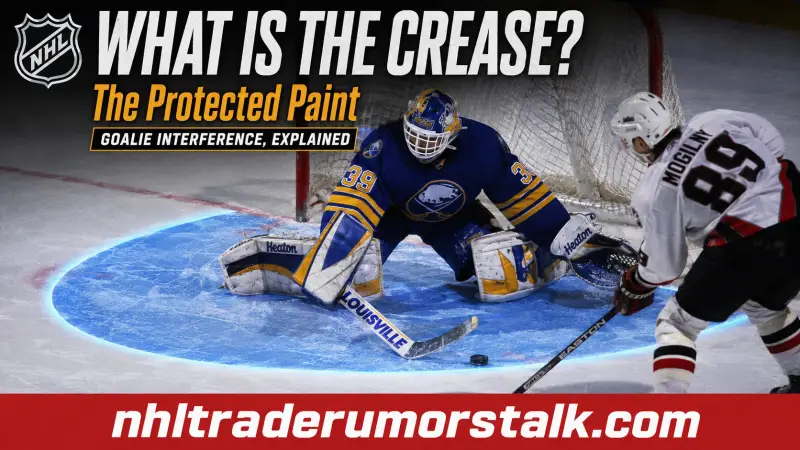
The crease is the blue half-circle painted on the ice directly in front of each net. It is the goaltender's office, the one patch of ice where the rules give a goalie room to move and defend without an attacker crashing into him. Understanding the crease means understanding goaltender interference, the rule that decides whether a goal scored in a scramble counts or comes off the board.
| Figure | What it represents |
|---|---|
| 1999 | The year Brett Hull's skate-in-the-crease Cup winner ended the NHL's strict no-crease rule |
| 6-foot | The radius of the semicircular crease, the protected zone the goaltender is given in front of the net |
One number marks the moment the old rule died, and the other defines the blue paint the modern rule still protects.
Key Takeaways
- What it is: The crease is the blue, semicircular protected zone in front of the net, a 6-foot radius where the goalie defends the goal.
- The old rule: through the 1990s, any attacking skate in the crease when a goal was scored meant no goal, even with no contact.
- The Brett Hull goal: his 1999 Cup-winner had a skate in the crease but counted on a possession ruling, and the rule was abolished soon after.
- Goalie interference now: a goal is disallowed only if an attacker impairs the goalie's ability to defend or makes deliberate contact.
- It can be challenged: goaltender interference is one of the calls a coach can put to video review.
What the Crease in Hockey Protects
The crease is the painted blue area in front of each goal, and on an NHL rink it is a semicircle with a 6-foot radius, eight feet wide, extending six feet out onto the ice at its deepest point. The blue color does a real job: it marks the goaltender's protected space, the area where he is allowed to move, challenge shooters and cover the puck without an opposing skater barreling through him.
The whole point comes down to balance. A goaltender who could be bumped, screened by body contact or knocked off his angles at will would have an impossible job, so the rules wall off the crease as his territory. Attackers are free to crowd the front of the net and bang home rebounds, which is where a lot of goals come from, but they cross into the goalie's space at their own risk. That tension between a hungry attacker and a protected goalie is the entire story of the crease.
The Strict Rule and the Brett Hull Goal
For most of the 1990s, the NHL drew that line in the harshest way possible. The rule held that no attacking player could precede the puck into the crease, and if an attacker had so much as a skate in the blue paint when a goal was scored, the goal was disallowed, even if he never touched the goalie or affected the play. Dozens of legitimate-looking goals were wiped out on a frozen replay frame of a skate over the line.
Then came the most famous crease play in history. In the third overtime of Game 6 of the 1999 Final, Brett Hull poked a rebound past Dominik Hasek to win the Stanley Cup for the Dallas Stars, with his left skate clearly inside the crease. The league ruled it a good goal, reasoning that Hull had possession and control of the puck, so the skate did not break the rule. Buffalo fans have called it "No Goal" ever since, and Hull has defended it for decades.
They changed the rule to say if you have control in the crease, you can score the goal, and that's exactly what it was.
— Brett Hull, on his 1999 Cup-winning goal, The Hockey News
The controversy became the final straw. The NHL abolished the rigid skate-in-the-crease rule the following season, deciding that a goal should not die on a technicality when the goalie was never bothered.
How Goalie Interference Works Now
In place of the old bright line, the league adopted a judgment-based standard called goaltender interference. Today an attacking player is allowed to stand in the crease; what he cannot do is interfere with the goalie. A goal is disallowed only if an attacker, by his positioning or contact, impairs the goaltender's ability to move freely and defend the net, or if he initiates intentional or deliberate contact with the goalie, inside or outside the crease.
That shift traded a rigid rule for a flexible one, and flexibility means argument. Whether a brush of contact "impaired" a goalie is a genuine judgment call, and officials wrestle with it on nearly every disputed goal.
These aren't black and white. There's a lot of judgment that goes into these.
— Kris King, NHL VP of Hockey Operations, via TSN
The Crease Under Challenge
Because so much rides on that judgment, goaltender interference is one of the plays a coach can formally contest. Since the coach's challenge arrived in 2015-16, a team can ask officials to review a goal, or a disallowed goal, for interference in the crease, and video review either confirms or overturns the call on the ice. It is the same challenge system that covers offside on the other end of the rush.
The crease sits at the heart of how goals are judged, which is why it connects to so much else in the rulebook. The same league decides how icing works, how the power play and penalty kill operate, how fighting is penalized, and how overtime is decided. And because the goalie inside that paint is so pivotal, the market for them, covered in our goalie free-agent guide, is one of the most scrutinized in the sport, right alongside how the standings shake out.
Written by Mike Johnson, NHL Senior Editor, with 15 years covering the league. The crease dimensions, the 1990s skate-in-the-crease rule, the 1999 Brett Hull goal and possession ruling, and the modern goaltender-interference standard were checked against the NHL rulebook, NHL.com, The Hockey News, TSN and Wikipedia. Both quotes were traced verbatim to their sources with inline links. The Protected Paint is my framework for the crease as the goalie's defended zone, introduced in this piece. Published June 23, 2026. Editorial review and fact-check: Sarah Chen, Hockey Operations Editor. Corrections: editorial@nhltraderumorstalk.com.
Sources and Reporting
- Goal crease: dimensions, history, goaltender interference
- Brett Hull: the 1999 Cup-winning goal and the no-goal controversy
- The Hockey News: Brett Hull defending the goal
- TSN: goaltender interference as a judgment call, Kris King quote
The Verdict: The Protected Paint
So the next time a goal goes to review for a player in the blue paint, you will know exactly what the officials are weighing. The crease is the goalie's protected six-foot zone, the old rule killed any goal with a skate inside it until Brett Hull's skate helped kill the rule instead, and today the only question that matters is whether the goalie was actually interfered with. The Protected Paint is where the game draws its hardest line between a great net-front goal and no goal at all.
Frequently Asked Questions
What is the crease in hockey?
The crease is the blue, semicircular area painted on the ice directly in front of each net. On an NHL rink it has a 6-foot radius, is eight feet wide and extends six feet onto the ice at its deepest point. The paint marks the goaltender's protected space, where he can move and defend the goal without an attacking player crashing into him.
Can you score from inside the crease?
Yes. Since the NHL abolished its strict skate-in-the-crease rule after 1999, an attacking player is allowed to stand in the crease and score, including on net-front rebounds. The goal only comes off the board if he interferes with the goaltender, by impairing the goalie's ability to defend or by making deliberate contact.
What was the Brett Hull no-goal controversy?
In the third overtime of Game 6 of the 1999 Stanley Cup Final, Brett Hull scored the Cup-winning goal for the Dallas Stars with his left skate inside the crease. Under the strict rule of the time, many believed it should have been disallowed, but the NHL ruled Hull had possession and control of the puck, so it counted. Buffalo Sabres fans still call it "No Goal," and the league scrapped the rigid crease rule soon after.
What is goaltender interference?
Goaltender interference is the modern, judgment-based standard that replaced the old crease rule. A goal is disallowed only if an attacking player, by his positioning or contact, impairs the goaltender's ability to move freely and defend the net, or if he initiates intentional or deliberate contact with the goalie, whether inside or outside the crease.
Can goaltender interference be challenged?
Yes. Since the coach's challenge was introduced in 2015-16, a team can ask officials to review a goal, or a disallowed goal, for goaltender interference in the crease. Video review then confirms or overturns the call on the ice. It is the same challenge system that also covers missed offside.
Related Stories
Why Is Fighting Allowed in Hockey? Explained
Why is fighting allowed in hockey? An educational guide to Rule 46: how it penalizes fighting with a five-minute major instead of an ejectio...
By Mike Johnson · 7 min read

What Is a Power Play in Hockey? Explained
What is a power play in hockey? A plain-English guide to the man advantage: five-on-four and five-on-three, why a minor penalty ends on a go...
By Mike Johnson · 7 min read
What Is Offside in Hockey? Rules Explained
What is offside in hockey? A plain-English guide to the blue-line rule: why offside is judged by the skates and not the stick, the 2020-21 v...
By Mike Johnson · 8 min read
What Is Icing in Hockey? Rules Explained
What is icing in hockey? A plain-English guide to the rule: the red line and goal line, the three icing systems (touch, no-touch and hybrid)...
By Mike Johnson · 8 min read
Comments
Be the first to share your take.
Get NHL trade rumors in your inbox
One email per week, zero spam, verified rumors only.