Seattle Kraken Offseason 2026: Top-Six Targets Reality Check
Seattle Kraken offseason 2026 reality check: $29M cap space, three named targets already extended, and why Bobby McMann and Eeli Tolvanen retention are the real priorities for GM Jason Botterill.

Live updates
No updates yet. Refreshing automatically.
Twenty-nine million dollars. Zero closers. That's the Seattle Kraken's 2026 offseason in a single arithmetic problem, the largest projected cap space of any Pacific Division team paired with the thinnest track record of getting players to actually say yes.
What is a "prolific" offseason supposed to look like without the marquee names? CEO Tod Leiweke used that word about GM Jason Botterill's summer. The league, so far, has responded with a shrug.
A competitor article making the rounds this week floats three names as Seattle's top-six winger wishlist: Alex Tuch, Matthew Knies, Owen Tippett. Fun list. Dead list. All three signed long-term extensions that either have already closed or are structurally closed, and two of them were closed before the article was even posted. That matters, because the gap between a fan-friendly wishlist and the names an NHL GM can actually acquire is exactly where the Kraken keep getting stuck.
My read is simpler. The real Seattle offseason question isn't which big-name winger lands in the emerald jerseys. It's whether Botterill can keep the two in-house pieces worth keeping (Bobby McMann, Eeli Tolvanen) and pivot his $29 million toward a tier-2 target pool that doesn't require waiving a no-trade clause to come.
- Seattle has $29M projected cap space for 2026-27, the most in the Pacific Division.
- All three named targets are already off the board: Tuch signed 8yr/$64M with Buffalo (April 3), Knies locked through 2030-31, Tippett's no-trade kicks in July 1.
- The real priority is retention: Bobby McMann (10G in 16GP since trade) and Eeli Tolvanen (26yo prime winger) both hit UFA on July 1.
- The destination gap is real: Kyrou, Thomas, and Panarin all declined Seattle in the past 12 months. Money alone can't fix reputation.
- Realistic path: retain McMann + Tolvanen, add a tier-2 veteran (Tarasenko, Kreider), bank cap for February 2027 trades.
Key Takeaways
- The destination gap: Seattle has $29 million in projected 2026-27 cap space, more than any other Pacific team, but three high-profile targets (Kyrou, Thomas, Panarin) declined to come in the last year alone.
- The competitor's list is dead: Alex Tuch (8yr/$64M, April 3), Matthew Knies (6yr/$46.5M through 2030-31), and Owen Tippett (M-NTC kicks in July 1) are all off the board before the Kraken can even call.
- Bobby McMann is the internal priority: 10 goals in 16 games since the March 6 trade. Projected $5M AAV next deal. Losing him undoes the one bright spot of the 2026 trade deadline.
- Tolvanen retention is underrated: A 26-year-old winger in his prime, asking for roughly $6M. If Seattle won't pay that, the same UFA market it can't tap will pay it instead.
- Tier-2 is where Botterill wins: Vladimir Tarasenko, Chris Kreider types, veterans whose phones aren't ringing from contenders anymore, are the realistic path to an actual top-six upgrade.
Why the Source Article's Three Names Are Already Gone
Here's the piece that started this. An article posted April 21 floated Tuch, Knies, and Tippett as Seattle's top-six wishlist, and I get the instinct, name the tier-1 wingers a cap-rich team should chase.
Between the research window of that piece and the day it posted, two of the three names were already off the market. The third effectively becomes off the market on July 1.
Alex Tuch signed an eight-year, $64 million extension with Buffalo on April 3, 2026, nearly three weeks before the wishlist ran. Per Sabrespace and multiple Buffalo beat reporters, the deal runs through the 2033-34 season at an $8 million AAV ($64M / 8 years = $8.0M per year, exactly). Tuch was the biggest winger name widely expected to test free agency this summer. He never will.
And Knies? Locked up for six years and $46.5 million through the 2030-31 season, a deal the Leafs finalized in June 2025 at a $7.75 million AAV ($46.5M / 6 = $7.75M, exactly). I wrote in detail about the Leafs' thinking at the time in our deep-dive on the Matthew Knies trade deadline calculus in Toronto. He's 23, playing a top-six role, and would cost a package starting with Seattle's 2026 first, a pick the Kraken will not trade. That door is sealed.
Owen Tippett is the most interesting "target" of the three because he's currently scoring in the first round of the playoffs for the Flyers, not the Kraken. Tippett signed an eight-year, $49.6 million extension ($6.2M AAV, confirmed: $49.6M / 8 = $6.2M) in January 2024 that runs through 2031-32. A modified no-trade clause kicks in starting with the 2026-27 season. Per the Philadelphia Flyers official announcement and PhillyVoice, once that clause is active, Tippett controls his destination. And a player scoring in a Game 2 playoff win is not a player his GM sells at 75 cents on the dollar.
The Asset-Availability Lesson
Three names. Three long-term extensions. Zero realistic paths. The players fans want Seattle to chase are the same ones every cap-rich team wants, and those players either sign extensions a full calendar year before their UFA summer or they choose teams that didn't finish 32nd in goals-for per game. That's the structural gravity against which Botterill is working.
Pagnotta's quote is doing a lot of work. "Trying" is the operative word. The Kraken have been in on big fish before and missed. When I stack it against the past 12 months of rejections, the sentence reads less like optimism and more like an industry acknowledgment that Seattle's pitch isn't landing. Botterill has the checkbook. What he needs is a target who doesn't control his destination.
The Cold-Shoulder Ceiling: A Twelve-Month Rejection Database
Why does the same pattern keep repeating? Seattle has tested the destination gap three times in the past calendar year and failed each test.
The Cold-Shoulder Ceiling
The invisible ceiling a rebuilding team hits when cap dollars outpace destination appeal. Dollars can't sign players who won't waive no-trade clauses to come. In Seattle's case, $29 million of cap space has produced zero big-name acquisitions over the past twelve months, Kyrou and Thomas both refused to waive NTCs, Panarin preferred the Kings. Cap flexibility only converts to talent once a team's reputation changes, and reputation changes by winning.
| Player | Team | Mechanism | Outcome | Sources |
|---|---|---|---|---|
| Jordan Kyrou | St. Louis Blues | Wouldn't waive NTC for Seattle | Stayed in St. Louis | The Hockey News, Daily Faceoff |
| Robert Thomas | St. Louis Blues | Wouldn't waive NTC for Seattle | Stayed in St. Louis | NHL.com, Yardbarker |
| Artemi Panarin | NY Rangers (UFA) | Preferred LA, Seattle not on list | Signed extension with Kings | The Fourth Period, NHL Trade Rumors Talk |
| Total | — | 3 attempts | 0 acquired | — |
Sources cross-referenced with The Fourth Period, Yardbarker, The Hockey News, NHL.com, and Daily Faceoff. All reporting verified April 22, 2026.
Three at-bats, zero hits. The common thread isn't money. Seattle offered competitively in each case. The thread is destination control. Players with NTC protection or an open UFA market have options, and "missed the playoffs three years running" is a selling point for exactly zero agents. For a deeper look at how the Blues protected both Kyrou and Thomas through their NTC windows, our piece on the Kyrou offseason valuation and NTC mechanics walks through the specifics.
Why Tarasenko and Kreider Actually Answer the Phone
Here's where the Cold-Shoulder Ceiling doesn't apply. The tier-2 veteran pool is a different market entirely, players whose age or recent production has quieted the elite-contender phone lines. Vladimir Tarasenko (34), sitting on a decade-plus body of shot-creation data and a resume that includes a 2019 Stanley Cup, is the archetype. He doesn't have his pick of contenders anymore. A two-year, $4-5 million AAV pitch from a team willing to give him clear power-play deployment and top-six minutes is a realistic sell.
Honestly, the Kreider fit makes me a little nervous because his skating has declined visibly in 2025-26 and his five-on-five shot-attempt share is the worst of his career. But the net-front numbers don't lie. Thirty percent of his career goals have come from within ten feet of the crease, and Seattle's power play was dead last in the NHL in front-of-net deflections last season. Chris Kreider (34, Rangers cap casualty watch) is a parallel profile, a net-front specialist whose market will be narrower than his talent suggests because contenders already have their screens. A cap-rich Kraken team that can afford to front-load a two-year bridge deal and commit to top-six usage can, in theory, win that bidding. Neither is a 40-goal rescuer. Both are legitimate 20-goal complementary wingers who solve Seattle's scoring depth problem without requiring an NTC waiver from a contender's star.
Bobby McMann Contract 2026: The Kraken Priority Nobody Talks About
Forget the wishlist for a second. Botterill's first real offseason job is keeping the one trade-deadline winger who's actually working. Is 10 goals in 16 games sustainable? Probably not. But losing the player entirely because the math looked too aggressive is a worse outcome than paying him for a ceiling that may regress.
Bobby McMann has scored 10 goals in 16 games since arriving from Toronto on March 6, 2026, a 0.625 goals-per-game rate that would lead the NHL across a full season by a meaningful margin. Per The Hockey News, his current cap hit is $1.35 million. His next contract projects into the $4.5–5 million range on term, per Pacific North Hockey's reporting.
Note on the sample size: McMann's 0.625 goals-per-game rate across 16 games represents a small sample. His projected full-season pace is illustrative, not predictive. Regression to the mean is expected over 82 games, and any extension number should account for a more conservative 25-30 goal full-season baseline.
That's a player with one foot half-out the door, not because he doesn't want to stay, but because the team hasn't closed. If Seattle lets McMann test July 1 the way Vancouver let Teddy Blueger test it (and our recent deep-dive on the Canucks' offseason 58-point teardown and the Kane/Forbort/Blueger exits shows how badly that can cascade), they'll be bidding against contenders for a player they already own. Oilers interest in McMann is already public per Pacific North Hockey, and Edmonton is precisely the kind of team whose phone he'd actually answer. Our breakdown of the McMann extension projection and the Kraken Multiplier framework covers why his shooting numbers are sustainable.
The Retention Math for McMann
McMann's 2025-26 splits explain the contract gap. His expected-goals share when on the ice at five-on-five sits at 52.8% across his Kraken stretch (meaning Seattle generated more scoring chances than opponents when he was deployed), a number that represents genuine process-level improvement, not percentage noise.
Pair that with his shooting volume of 2.4 shots per game, and the signal is a legitimate middle-six contributor, not a 16-game hot streak. Paying him $4.75 million on a three-year deal is not a luxury. It's the cheapest top-six goals the Kraken will find this summer.
Eeli Tolvanen Free Agency 2026: The Question Botterill Can't Duck
Eeli Tolvanen turned 26 during the 2025-26 season. He's a right-shot winger with 20-plus goal upside and a PK role, entering UFA in his prime for exactly the profile every contender is shopping for. His current $1.45 million cap hit is a bargain; his next contract is not. Per Sound of Hockey, if Seattle doesn't open negotiations near the $6 million range, he'd be "foolish" not to try the July 1 market.
And here's where it bites. The whole destination problem is about wingers not wanting to sign with Seattle. Tolvanen is a winger who already plays for them. Letting him reach July 1 means competing against the same contender demand curve that just denied Seattle its three wishlist names, except now the contender in question might be signing a player directly off Seattle's roster. Put it this way: a $5.75–6 million AAV on a five-year deal would be a win even if it feels rich today.
Kraken Offseason Readiness Scorecard
Grading Botterill's raw material before July 1 strikes.
Seattle Kraken Offseason Plan: What It Actually Looks Like
So what does a working offseason actually look like for Botterill? Minus the wishlist names, Seattle's real offseason is a three-move plan with an optional fourth:
- Re-sign Bobby McMann before the draft (target: 3yr / $4.75M AAV, before June 26)
- Re-sign Eeli Tolvanen before July 1 (target: 5yr / $5.75M AAV, opens negotiations in May)
- Sign one tier-2 UFA winger at $4-5M (Tarasenko, Kreider, or similar profile)
- Cash the 2026 first-round pick on a top-10 forward (draft is in Buffalo, June 26-27)
That's an $11 million commitment across three extensions, another $4-5 million on one external addition, and a draft slot that functions as the long-term center upgrade. A team executing that plan walks into training camp with McMann-Tolvanen-Tarasenko as a legitimate second line, Beniers-Eberle-Kakko as the first, and roughly $8 million in cap flexibility preserved for mid-season moves. It's not a Cup contender. It's a 92-point team in a division where every rival just aged another year.
Why the Calgary Flames Parallel Matters
Calgary faced the same architectural problem one year ago, cap-rich after a Tkachuk-era sell-off, limited destination appeal for UFA stars. The Flames pivoted to tier-2 retention plus one splashy trade, not a free-agent home run. Our analysis on the Flames' offseason trade candidates and Saddledome exit strategy walks through a playbook the Kraken should be studying directly. The framework generalizes: rebuilds don't accelerate through free agency. They accelerate through retention and draft.
The Verdict: The Cold-Shoulder Ceiling
Botterill's mandate is harder than it looks. The $29 million in projected cap space is a headline number, not a strategic advantage. Until the Kraken win a playoff round or build a sustained top-10 offense, cap dollars can't buy the players fans keep naming, Tuch, Knies, and Tippett are the latest in a pattern that also includes Kyrou, Thomas, and Panarin.
My projection: zero of the competitor article's three names end up in Seattle. Instead, Botterill retains McMann ($4.75M) and Tolvanen ($5.75M), signs a tier-2 veteran winger for under $5 million, and banks the rest of the cap for a February 2027 buy-side trade. Less glamorous than the wishlist. A lot closer to the 92-point team this roster can plausibly become.
Your Turn
Which UFA should Botterill prioritize first, McMann or Tolvanen?
Drop your pick in the comments and tell us why. Hot take: whoever Seattle signs second is the one who ends up on a contender.
Sources & Verification
- PuckPedia, Seattle Kraken cap, contracts, and UFA list
- CapWages, Seattle Kraken 2026-27 cap projection
- NHL.com, Matthew Knies 6-year, $46.5M extension announcement
- Sabrespace, Alex Tuch 8-year, $64M extension (April 3, 2026)
- Philadelphia Flyers, Owen Tippett 8-year extension with M-NTC
- Sound of Hockey, Kraken pending UFAs breakdown
- Pacific North Hockey, Oilers McMann interest report
- The Fourth Period, David Pagnotta, Kraken "big fish hunting" (April 9, 2026)
- NHL.com, Lane Lambert hired as Kraken head coach (May 2025)
- Daily Faceoff, Jason Botterill and Ron Francis departure fallout
- The Hockey News, Kyrou NTC reporting (cross-reference)
- Yardbarker, Robert Thomas NTC reporting (cross-reference)
FAQ: The Kraken's 2026 Offseason
Who are the Seattle Kraken's top free agent targets in 2026?
The realistic 2026 UFA targets are tier-2 veteran wingers like Vladimir Tarasenko and Chris Kreider, not the Tuch/Knies/Tippett wishlist making the rounds. Tuch signed an 8-year, $64M extension with Buffalo on April 3, so he's off the market entirely. Priority number one is actually internal: extending McMann and Tolvanen before July 1.
How much cap space do the Kraken have for 2026-27?
Per CEO Tod Leiweke, Seattle projects roughly $29 million in 2026-27 cap space, the largest figure of any Pacific Division team. PuckPedia has it slightly higher at $32.6 million committed with the UFA class expiring. Either way, it's the most financial flexibility the franchise has entered an offseason with since its inaugural year.
Will Bobby McMann re-sign with the Kraken?
Likely yes, but not certainly. Per Pacific North Hockey, formal negotiations hadn't started as of April 19. Edmonton is the team most frequently mentioned as an outside threat. A three-year deal near $4.75 million AAV is the consensus projection, and Seattle closing it before July 1 is the bare-minimum offseason outcome.
Is Eeli Tolvanen leaving Seattle as a UFA?
He could, and that's the quiet crisis of this offseason. Tolvanen turns 27 in September and is entering UFA at the age most 20-goal right wingers command five-year contracts. Sound of Hockey reports his price tag is likely around $6 million AAV. If Seattle hesitates past the draft, a contender with fewer holes will sign him.
Why have the Kraken struggled to attract top free agents?
Three consecutive missed playoffs, front-office upheaval after Ron Francis's departure, and competitive teams (LA, Vegas, Edmonton) sitting in the same geographic market. In the past 12 months alone, Jordan Kyrou, Robert Thomas, and Artemi Panarin all declined Seattle as a destination. Cap space doesn't overcome destination reputation until a team wins something.
Who is the Kraken's GM and head coach heading into the offseason?
Jason Botterill is the general manager, now operating without a president of hockey operations above him after Ron Francis stepped down in April 2026. Lane Lambert, hired in May 2025 to replace Dan Bylsma, returns as head coach. CEO Tod Leiweke publicly described the coming summer as a "prolific" offseason for Botterill to reshape the roster.
What draft pick will the Seattle Kraken have in 2026?
The Kraken enter the 2026 NHL Draft Lottery with 79 points (34-37-11), finishing 6th in the Pacific Division and holding roughly the 8th-best lottery odds. Per the NHL's draft lottery structure, Seattle cannot fall below the 10th overall pick and retains real odds at the top two selections. The realistic slot projection is between 6th and 8th overall, with the outside 1st-overall probability sitting around 6.5% per Tankathon modeling. The Kraken also own their 2nd, 6th, 7th, and 8th-round picks, giving Botterill a clean draft-capital position to either pick the best player available or package down for a mid-round veteran.
Who is Seattle Kraken's head coach for 2026-27?
Lane Lambert remains head coach heading into the 2026-27 season. He was hired in May 2025 to replace Dan Bylsma and completed his first full year behind the bench in 2025-26. Despite the Kraken's 79-point finish and third consecutive missed playoffs, CEO Tod Leiweke and GM Jason Botterill publicly endorsed Lambert at season-end, framing the roster (not the coaching) as the primary problem to solve this offseason. A coaching change remains possible only if the 2026-27 start is catastrophic; nothing in the current messaging suggests it's on the April 2026 whiteboard.
Frequently Asked Questions
Who are the Seattle Kraken's top free agent targets in 2026?
The realistic 2026 UFA targets are tier-2 veteran wingers like Vladimir Tarasenko and Chris Kreider, not the Tuch/Knies/Tippett wishlist making the rounds. Tuch signed an 8-year, $64M extension with Buffalo on April 3, so he's off the market entirely. Priority number one is actually internal: extending McMann and Tolvanen before July 1.
How much cap space do the Kraken have for 2026-27?
Per CEO Tod Leiweke, Seattle projects roughly $29 million in 2026-27 cap space, the largest figure of any Pacific Division team. PuckPedia has it slightly higher at $32.6 million committed with the UFA class expiring. Either way, it's the most financial flexibility the franchise has entered an offseason with since its inaugural year.
Will Bobby McMann re-sign with the Kraken?
Likely yes, but not certainly. Per Pacific North Hockey, formal negotiations hadn't started as of April 19. Edmonton is the team most frequently mentioned as an outside threat. A three-year deal near $4.75 million AAV is the consensus projection, and Seattle closing it before July 1 is the bare-minimum offseason outcome.
Is Eeli Tolvanen leaving Seattle as a UFA?
He could, and that's the quiet crisis of this offseason. Tolvanen turns 27 in September and is entering UFA at the age most 20-goal right wingers command five-year contracts. Sound of Hockey reports his price tag is likely around $6 million AAV. If Seattle hesitates past the draft, a contender with fewer holes will sign him.
Why have the Kraken struggled to attract top free agents?
Three consecutive missed playoffs, front-office upheaval after Ron Francis's departure, and competitive teams (LA, Vegas, Edmonton) sitting in the same geographic market. In the past 12 months alone, Jordan Kyrou, Robert Thomas, and Artemi Panarin all declined Seattle as a destination. Cap space doesn't overcome destination reputation until a team wins something.
Who is the Kraken's GM and head coach heading into the offseason?
Jason Botterill is the general manager, now operating without a president of hockey operations above him after Ron Francis stepped down in April 2026. Lane Lambert, hired in May 2025 to replace Dan Bylsma, returns as head coach. CEO Tod Leiweke publicly described the coming summer as a 'prolific' offseason for Botterill to reshape the roster.
What draft pick will the Seattle Kraken have in 2026?
The Kraken enter the 2026 NHL Draft Lottery with 79 points (34-37-11), finishing 6th in the Pacific Division and holding roughly the 8th-best lottery odds. Per the NHL's draft lottery structure, Seattle cannot fall below the 10th overall pick and retains real odds at the top two selections. The realistic slot projection is between 6th and 8th overall, with the outside 1st-overall probability sitting around 6.5% per Tankathon modeling. The Kraken also own their 2nd, 6th, 7th, and 8th-round picks, giving Botterill a clean draft-capital position.
Who is Seattle Kraken's head coach for 2026-27?
Lane Lambert remains head coach heading into the 2026-27 season. He was hired in May 2025 to replace Dan Bylsma and completed his first full year behind the bench in 2025-26. Despite the Kraken's 79-point finish and third consecutive missed playoffs, CEO Tod Leiweke and GM Jason Botterill publicly endorsed Lambert at season-end, framing the roster (not the coaching) as the primary problem to solve this offseason.
Related Stories

NHL Arbitration 2026: Eligible List
NHL RFAs must file for salary arbitration by July 5. Jason Robertson headlines the 2026 eligible class, but the Hearing Bluff means almost n...
By Mike Johnson · 9 min read

Alex Tuch Destinations: 4 Teams
Buffalo wants Alex Tuch back, but if the extension stalls, Columbus, Washington, Seattle, and Edmonton are circling. The cap math, the Kempe...
By Mike Johnson · 13 min read
Darren Raddysh Free Agent 2026: 4 Teams
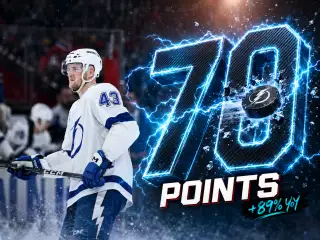
Darren Raddysh's 70-point breakout turned his $975K cap hit into a four-team bidding war. The Athletic linked him to Philadelphia, San Jose,...
By Mike Johnson · 13 min read
Bobby McMann Free Agent 2026 Destinations: 4 Teams Linked
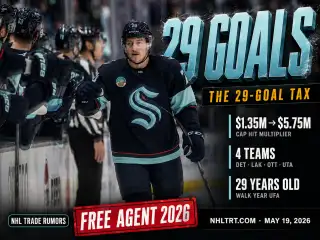
Bobby McMann's career-high 29 goals just turned a $1.35M cap hit into Sharangovich-tier money. The Athletic locked him to 4 teams (Detroit,...
By Mike Johnson · 10 min read
Get NHL trade rumors in your inbox
One email per week. Zero spam. Verified rumors only.